

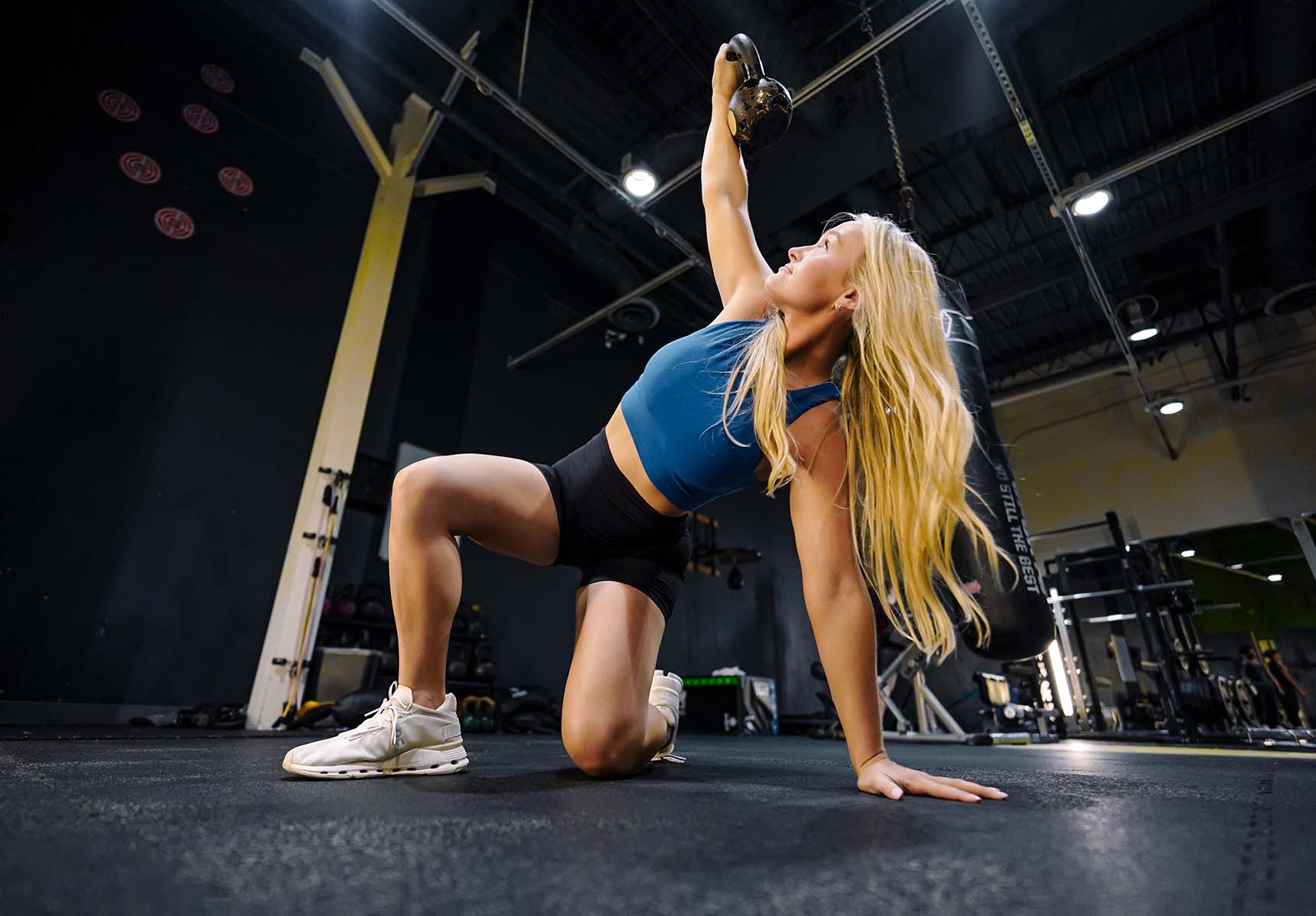
Healthy Aging Starts With Strength
How to Build Muscle, Mobility and Independence at Any Age
Do you find the idea of healthy aging abstract? It can feel that way, especially if you are in your 50s, still training and not thinking of yourself as older at all. That is actually a good time to think about it, while strength is already part of your life and there is plenty you want to keep doing.
You may feel strong and capable today, and that is the point. Healthy aging is easier to plan for before ordinary movement starts asking more of you. The work you put in now can help you keep that physical margin for years, whether that means staying active with your kids today or keeping up with grandkids later.
That is where strength training earns its place. If lifting is already part of your week, the conversation shifts naturally toward what you want that training to keep doing for you. Strength still needs support from mobility, balance and sensible recovery, especially if the goal is to keep moving well for the long run.
Seen this way, you find healthy aging seeming less abstract. Then, you can keep your body capable of handling ordinary life and keep building on the work you are already doing.
Why Does Strength Matter More as We Age?
Science tells us that muscle mass and strength tend to decline with age, although everyone ages differently. That decline, and its pace, depends on various factors, including the following:
- Activity
- Illness
- Sleep
- Nutrition
- Training history
- Medical history
So, if you are already strength training, you already have a useful base. The next step is to keep giving your body a reason to adapt instead of assuming the same routine will carry you indefinitely. The American College of Sports Medicine made that point clearly in its 2026 position stand on resistance training. It shared that progressive resistance exercise improves your muscular fitness across adulthood, and programs can be adapted to different abilities.
If progressive sounds too technical, there’s a simple way to understand the idea. Maybe you already squat or row every week. If the same weight and reps have become comfortably familiar, progress can be as simple as adding a little load or another repetition. Nothing dramatic has to happen. The task changes because you changed.
In a BMJ Open Sport & Exercise Medicine trial, it was found that adults around retirement age retained some leg-strength benefits several years after a year of heavy resistance training. The study is useful for a simple reason: strength work done consistently can continue paying you back later.
How Does Strength Training Support Everyday Movement?
Once you start linking strength training to the life you want to keep living, exercise selection becomes less mysterious. If you already train, there is usually no reason to rebuild your routine from scratch. Look instead at whether the movements in your program are helping you keep the strength you want outside the gym too.
To begin with, think about standing from a chair. In a squat, you’re training a similar pattern. Picking something up from the floor asks your hips and legs to share the work, so a controlled hip hinge can help. These are gym movements, yes, but they also rehearse things your body already does.
So what does that look like in a program you may already be doing? Start by checking that the main movement patterns are there:
- Squat or sit-to-stand for controlled rising and lowering
- Push and pull for practical upper-body strength
- Hinge, step and carry for lifting, stairs and loaded movement
From there, you can keep the equipment you already enjoy using. Machines, dumbbells, bands and body-weight work can all fit. The better question is whether you can control the movement and keep challenging it over time. A 2025 systematic review and meta-analysis, which involved adults 65 and older, found that resistance exercise improved lower-body strength, balance and coordination.
You can see how those qualities meet when your balance is challenged for a split second. Your legs have to produce force while your balance system reacts. That is why strength training can support more than stronger muscles.
Why Do Balance and Mobility Matter With Age?
If you already lift, mobility can be one of the easiest pieces to overlook. Strong legs help, but stiff ankles can still make a squat or a flight of stairs feel rougher than it needs to. That is where a little focused mobility work earns its place. So, what’s next?
Naturally, a few focused minutes on a restriction that affects your movement can be more useful than stretching everything out of habit.
In the same way, balance can be trained deliberately without turning it into a separate event. Single-leg work, controlled step-downs or loaded carries that challenge stability can all provide useful practice. A 2026 systematic review of task-oriented exercise found improvements in balance, gait speed and functional mobility among older adults. The idea is fairly intuitive: if you want a movement skill to stay familiar, it helps to practice it before you urgently need it.
How Does Recovery Support Healthy Aging?
If training is already part of your week, recovery belongs in the healthy-aging conversation too. Since exercise is providing the challenge, sleep, food and time between harder sessions will naturally give your body space to respond. But if every workout leaves you exhausted for several days, you should take note of that.
Training should be asking something of you, but it should also leave room to come back and do it again. Now, this is where protein-rich meals can support muscle maintenance and repair. At the same time, hydration and balanced nutrition will ensure proper refueling for the next session.
Also, everyone needs a slightly different mix of nutrition and hydration alongside a disciplined exercise regimen. Scientific baselines can give you a useful place to work from, but individual needs can change with medications or medical conditions, so general advice has limits.
You should refer to a registered dietitian or healthcare professional to get help when the picture is more complicated. While mild soreness can happen after unfamiliar work, get appropriate medical guidance in case of sharp pain, dizziness, chest pain or unusual symptoms.
How Often Should You Strength Train for Healthy Aging?
For healthy aging, two or more strength-training sessions each week remain a useful baseline when health and recovery allow. If you already train more often, there is no reason to scale back simply because the calendar moves forward. Your current split can still work. What matters is whether the major muscle groups are getting enough quality work and enough recovery to keep progressing.
Then progress becomes easier to read in context. Perhaps a weight you have used for months starts moving more cleanly, or the same session leaves you feeling better recovered the next day. Those changes count too. If your health or training tolerance changes over time, adjust the plan and get professional guidance when you need it.
Train for What You Want to Keep
Remember that the most meaningful signs of progress often appear outside the gym. Maybe you can still spend a full day keeping up with your kids without thinking twice about it, and years from now you want that same freedom with grandkids. That kind of capacity is easy to overlook while you have it.
Those moments feel normal, which is exactly why they matter. Healthy aging is partly about keeping ordinary movement ordinary, and thinking about it in your 50s gives you more time to protect what you have already built. So, keep training, keep enough mobility to use that strength, practice balance and recover well enough to return.hy aging is about helping ordinary movement remain ordinary. Keep building strength, maintain the mobility to use it, practice balance and recover well enough to return.
Build Strength for the Life Ahead
Whether you’re beginning strength training or ready to refresh your routine, a Genesis personal trainer can help you understand where you are today and build a plan around your goals. Get started with a complimentary personal fitness assessment.