

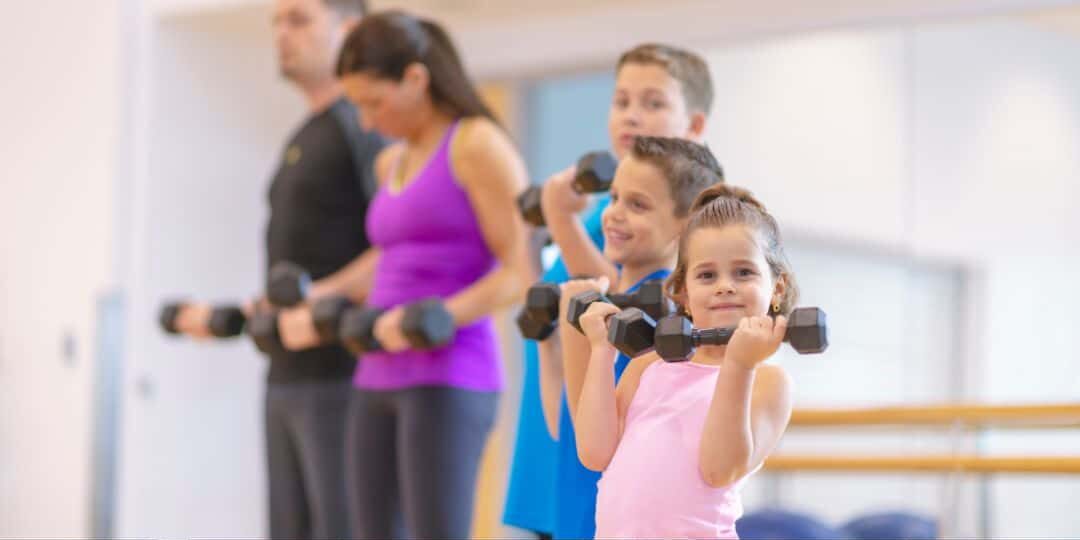
Fitness Is Better Together
Simple Ways to Help Your Family Move More and Have Fun
Family Health & Fitness Day falls on September 26 this year, which raises a simple question: when did being active together start needing a plan?
For most families, some of the best movement and fitness already happens in ordinary moments. Think of heading out for a walk after dinner because everyone needs a change of scenery. Or maybe Saturday turns into pool time. Someone mentions pickleball, and you go, “for a little while,” and suddenly an hour has gone by.
That is often where the good stuff begins. When movement feels less like a scheduled workout and more like something the family naturally does together, it is easier to enjoy, easier to repeat and, before long, part of your week without anyone having to force it.
Why Family Fitness Works Better When It Feels Normal
Children often pick up on how their parents, or the adults around them, approach exercise. If movement, exercise, health or fitness is always talked about like a chore, a punishment, or something you only do to change your body, they notice that. Most importantly, they remember that and it programs their subconscious, although slowly and subtly. Same way, if exercise and fitness feel normal and enjoyable, they notice that too.
That’s why parents and caregivers shape a lot of that without necessarily trying to. Research shows a positive relationship between parent and child physical activity, and the CDC encourages families to work into everyday life through different activities, including:
- Walks
- Active play
- Shared outing
So, there is no need to roll out a formal “family fitness program.” You can always start with something your family already enjoys, then give it a little more room in the week.
Maybe that is walking the dog together. The activity matters, but repeatability matters. If people want to do it again next week, you have something useful, right?
Start With What Your Family Will Actually Do
There is always that temptation to make healthy habits more complicated than they need to be. We know how a detailed schedule looks impressive to you and everybody else. But if nobody wants to follow it, then your refrigerator calendar has simply gained decoration.
Instead, think about the natural gaps in your week. Could ten or fifteen minutes after dinner become a walk around the neighborhood? Is there one evening when everyone is usually home? Could one of your weekend errands end with a stop at the park?
Well, here are a easy options that can help:
- Walk after dinner and let a different person choose the route
- Pick one weekend activity, such as biking, swimming or pickleball
- Turn outdoor time into a game instead of announcing “exercise”
That last one is especially useful with younger children. The CDC notes that children ages 6 to 17 should get at least 60 minutes of physical activity each day, but movement can come from play, sports, walking, running and many other activities.
Let Different Ages Move Differently
Family activities usually work better when everyone has flexibility to do things their own way. If you have a six-year-old, he or she is going to engage in movement and exercise very differently from a teenager in the house. Both will probably have different limits from a parent in their forties.
Your goal does not have to be getting everybody through the same workout. At the pool, one person might swim laps while someone else stays in the water and plays. On a bike ride, you can keep the route comfortable for the whole family and let stronger riders push a little farther if they want to. The same idea works at the health club too. You may all be doing something different, but you are still showing up and being active together.
That flexibility takes some pressure off. Nobody has to “win” family fitness. You are simply creating more chances to move.
There may be a relationship benefit too. A 2024 systematic review found some evidence that family-based physical activity programs can improve family cohesion, particularly when children are in the early school years. You are doing something together, talking, laughing and probably negotiating the rules along the way.
Make Fun the Part You Repeat
If there is one thing worth protecting, it is enjoyment. As an adult, you can tolerate workouts you dislike because you understand the long-term payoff. However, your children will be usually less interested in that sales pitch, if there’s any.
So ask them: what sounds fun this weekend?
Would they rather swim, ride bikes, play basketball or try something new?
Giving children some say can turn movement from a parent-directed task into something the family owns together. Moreover, you can do the same with small challenges, as long as they stay playful.
Take a mini obstacle course, for example. That’s something you can use to not only help create opportunities for healthy movement, but have a fun time building, too. You can also count how many pool laps the family completes together. Or, try a new trail and let the kids choose a turn. There is no need to make every outing educational. Sometimes everyone can simply enjoy being active.
The broader health case is strong. Regular physical activity supports heart health, muscular fitness, sleep, mood and brain health, while children gain benefits that include stronger bones and improved attention. Those outcomes matter. They just do not need to be the topic of conversation during your bike ride, right?
Build a Habit Your Family Can Keep
Family Health & Fitness Day is a good reason to try something new on September 26, but one active Saturday is not the real, or ONLY, opportunity.
The better question is what you might still be doing a month later.
Maybe the after-dinner walk sticks, the Saturday mornings become pool time, or perhaps, the pickleball. They can simply be the activities everyone complains about losing and immediately want to play again.
That is how family fitness becomes useful. You find movement that fits your household, make it easy enough to repeat and let it become part of the rhythm of the week.
You do not need matching workout clothes, a complicated plan or a family leaderboard. Start with time together and give that time a little movement. Fitness is better together when together is the part everyone looks forward to.